

Inside the Human Algorithm
How AI Is Learning From Our Digital Behavior

When people talk about “the algorithm,” they picture code, lines of math quietly ranking our posts, deciding what deserves attention. But the longer you study engagement, the clearer it becomes: the algorithm isn’t just software.
It’s us, quantified, reflected, and amplified by machines.
The Hidden Grammar of Interaction
Scroll through any platform long enough and you start to feel a rhythm. Replies pull us into dialogue. Reposts spread ideology. Likes reward alignment. Quotes add commentary without risk.
Each action is a verb in a new kind of language, the grammar of attention.
“Engagement metrics are the punctuation marks of human emotion online.”
What we call “the algorithm” simply learned to read us. It maps the micro-behaviors we repeat, outrage, humor, empathy, mockery, and learns which combinations sustain interaction.
The result is a feedback loop: our instincts train the model, and the model trains our instincts in return.
We’re no longer just users of these systems. We’re participants in their evolution.

Mapping Digital Archetypes
At scale, patterns of engagement begin to resemble social archetypes.
The Catalyst provokes, knowing reaction equals reach.
The Curator shares and aligns, building credibility through association.
The Connector asks questions, weaving communities together.
The Performer optimizes every post for applause.
The Observer rarely speaks, but still shapes the algorithm through silent attention.
“Every timeline is a living map of behavioral archetypes negotiating for relevance.”
When AI models analyze billions of these interactions, they don’t just see content, they see behavioral structure. The same models we once used to classify language are now capable of classifying attention itself.
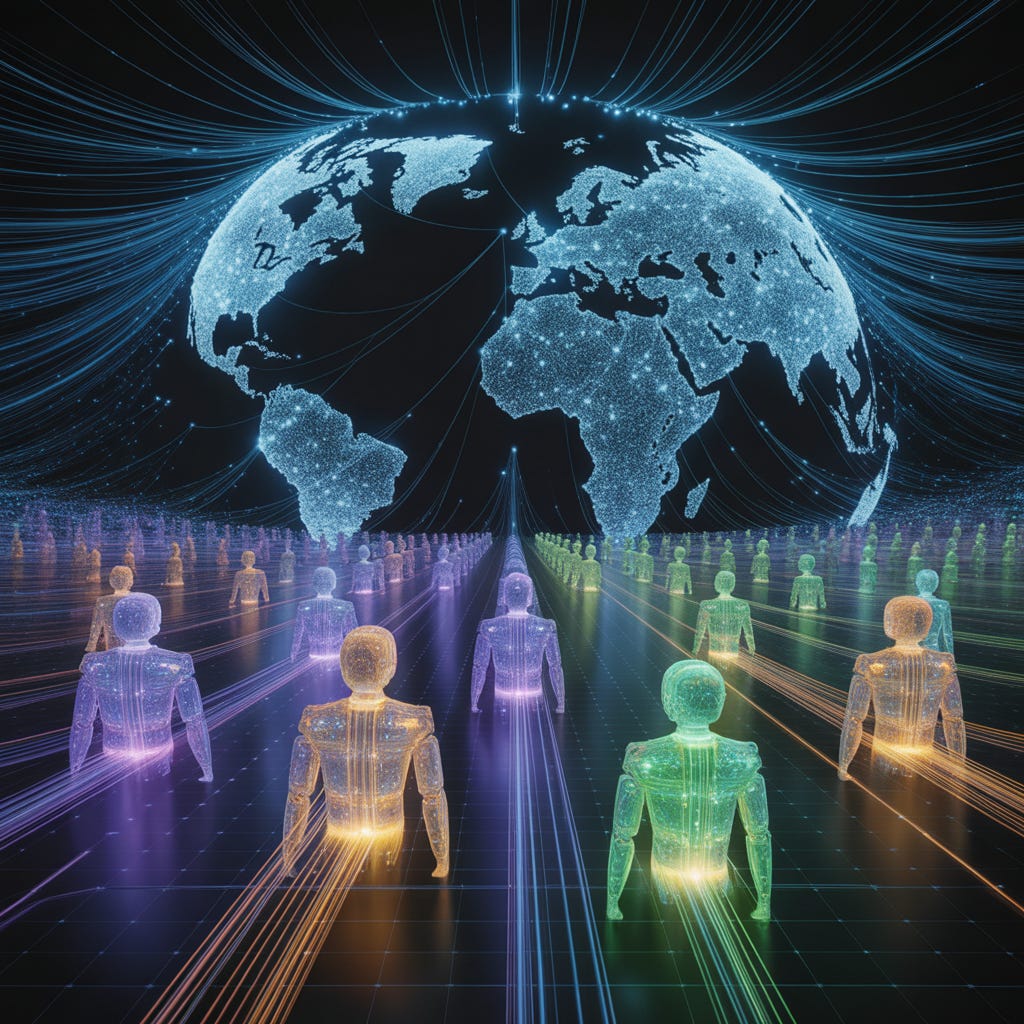
When AI Enters the Loop
The arrival of generative and agentic AI changes the equation.
For the first time, machines can not only observe our digital behavior, they can participate in it.
AI-generated posts, comments, and replies feed back into the same systems that measure engagement, subtly shifting what “authentic interaction” looks like.
That doesn’t make the system artificial; it makes it hybrid. The human and the machine are co-writing the social code, one interaction at a time.
“AI isn’t replacing the algorithm, it’s completing it.”
Because algorithms evolve through data, every AI-generated thought or emotion becomes new training material. And so, in a strange twist, the algorithm begins to learn from a reflection of itself.
Studying Attention at Scale
Traditional social science could only observe small groups. AI lets us study billions of micro-interactions in motion.
That scale makes visible what used to be invisible, the collective psychology of digital life.
It allows us to measure curiosity, empathy, or hostility not to commodify them, but to understand their gravity.
Imagine if social platforms measured the quality of engagement instead of its quantity, if they weighted curiosity over outrage, dialogue over dopamine.
AI makes that technically possible.
“We’ve built the first microscope powerful enough to study collective attention.”
But whether we use it for insight or influence is still up to us.

Transparency Misses the Point
When platforms like X publish their ranking code, it’s framed as transparency.
But revealing the math doesn’t explain the behavior.
The real model isn’t in the code, it’s in us.
Every like, share, or block is a micro-decision training a global behavioral network.
So when we say “the algorithm favors outrage,” we’re really saying we do.
The algorithm merely scales our patterns and reflects them back, amplified.
“The social algorithm doesn’t live on a server, it lives in our collective behavior.”
Transparency efforts matter, but they miss the core truth: the most powerful algorithm in the world is human attention itself.
Conclusion: The Code Within
The algorithm isn’t a villain or a mystery. It’s a mirror.
Every metric is a reflection of what we value, whether or not we admit it.
AI didn’t invent this feedback loop, it just made it visible.
And maybe that’s the opportunity: to finally see how our instincts, incentives, and impulses write the rules that machines only enforce.
“Before we can fix the algorithm, we have to admit that we wrote its first draft.”
If we want a healthier digital world, the rewrite doesn’t start in the code, it starts in us.
Absolutely remarkable how this neat theory actually unfolds and delivers massive value on the practical scale